To design in monochrome is not, as is sometimes assumed, to design without constraint. It is to accept a different set of constraints — ones that operate not on the surface but beneath it, in the structure of the fabric, the geometry of the cut, the relationship between garment and gravity.
Monograph has now completed six seasons under its self-imposed chromatic restriction. In that time, creative director Astrid Vinter has produced what may be the most rigorous body of monochrome work in contemporary European fashion — not because the palette is limited, but because the limitations have been made productive.
"Restraint is often confused with absence," Vinter told me over coffee at the atelier last November. "But restraint is a presence. It's the thing you chose not to do, made visible by everything you did do. When I remove colour, I'm not removing anything. I'm asking every other decision to work harder."
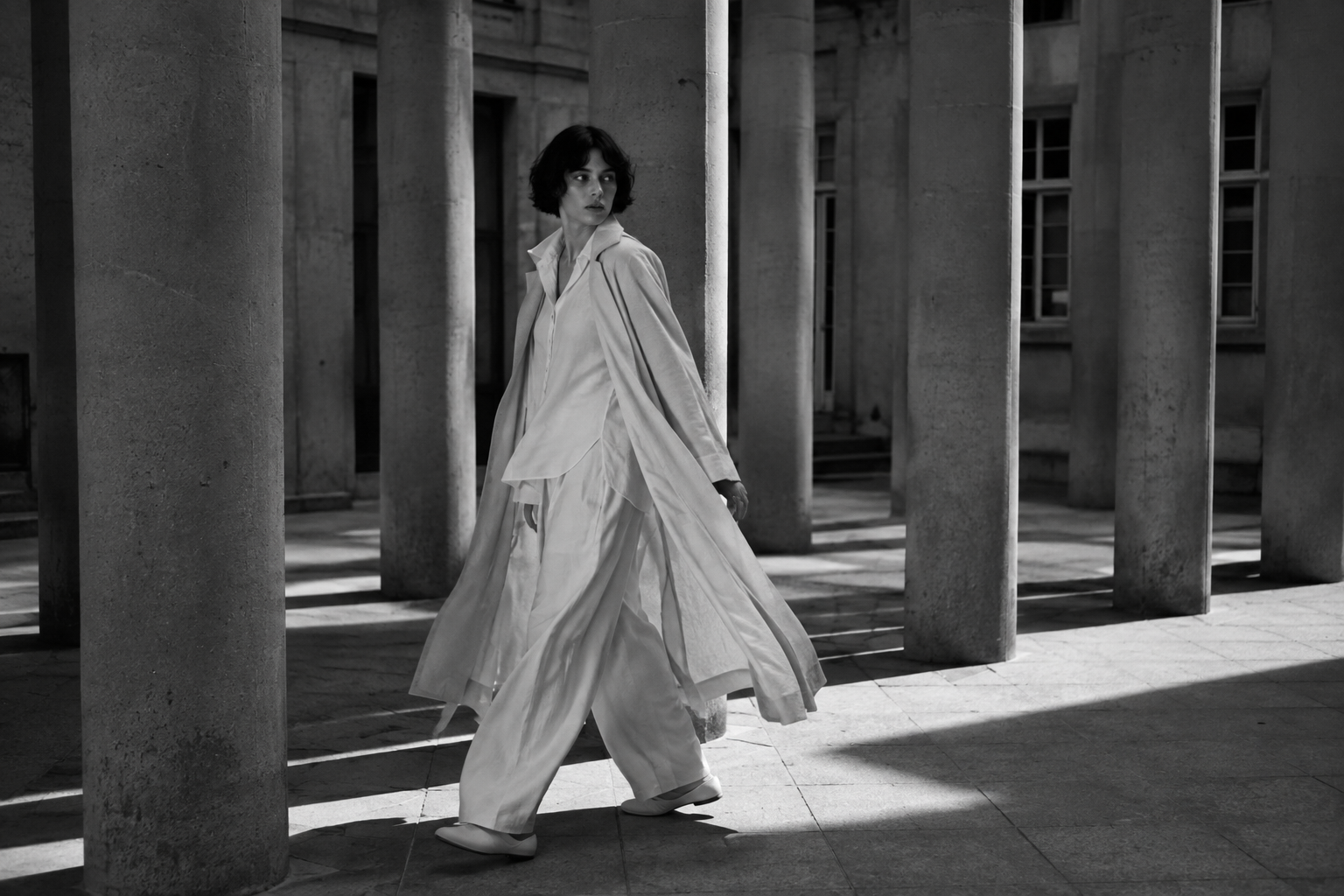
The results are striking. A Monograph garment, handled without context, feels denser than its weight suggests — not physically, but perceptually. The absence of colour forces the hand to attend to texture, to weight, to the way a seam resolves at a shoulder. "You can't hide in monochrome," says pattern cutter Søren Dahl. "Every line has to be right."
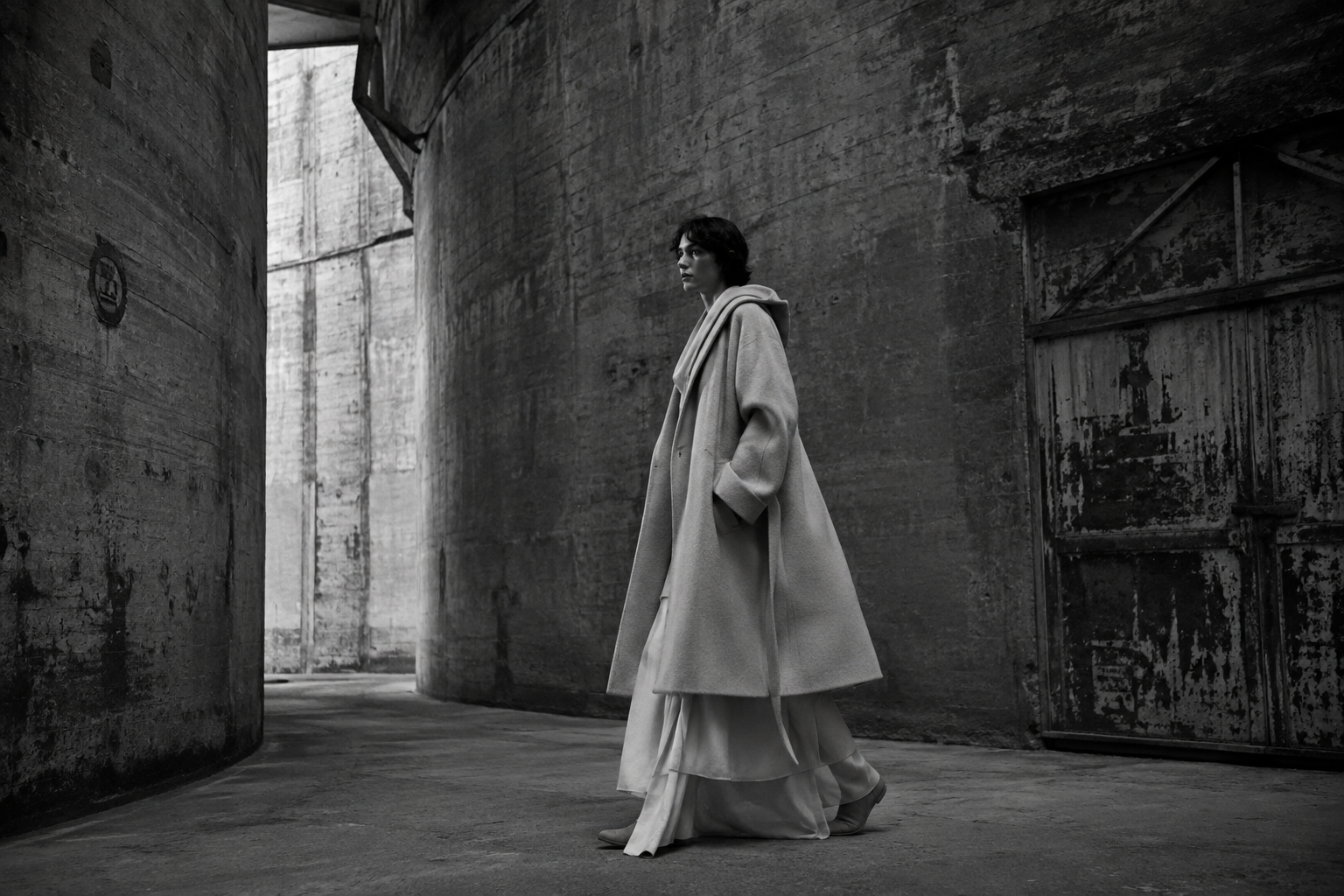
What this means for the wearer is complex. A Monograph coat, worn daily through a Copenhagen winter, accumulates a relationship with its owner that coloured garments rarely achieve. Without the distraction of hue, the body learns the garment's geography — the exact point where a collar turns, the way a cuff falls when the arm is raised, the particular silence of a hem that has been weighted to move with a specific rhythm.
This is not minimalism, though it is often described as such. Minimalism is an aesthetic position. What Monograph practices is closer to an ethics — a commitment to making only what is necessary, in the materials that are honest, in the colours that do not lie.
The cost of this commitment is real. Monograph's production runs are small — never more than sixty pieces per style — because the fabrics they work with are produced in limited quantities by mills that share their patience. The price points reflect this. But so does the longevity: a Monograph garment, cared for according to the instructions sewn into its lining, will outlast almost anything in a contemporary wardrobe.
"I'm not interested in clothes that photograph well," Vinter says. "I'm interested in clothes that live well. There's a difference, and it has nothing to do with colour."